NEVER ISSUED
Keep Calm stayed in store
The Ministry of Information printed 2.45 million Keep Calm and Carry On posters in 1939, but their display was never officially authorised.
See the numbers doodleposters
Start
WHAT THE ARCHIVES SHOW
No television, no internet, no social media.
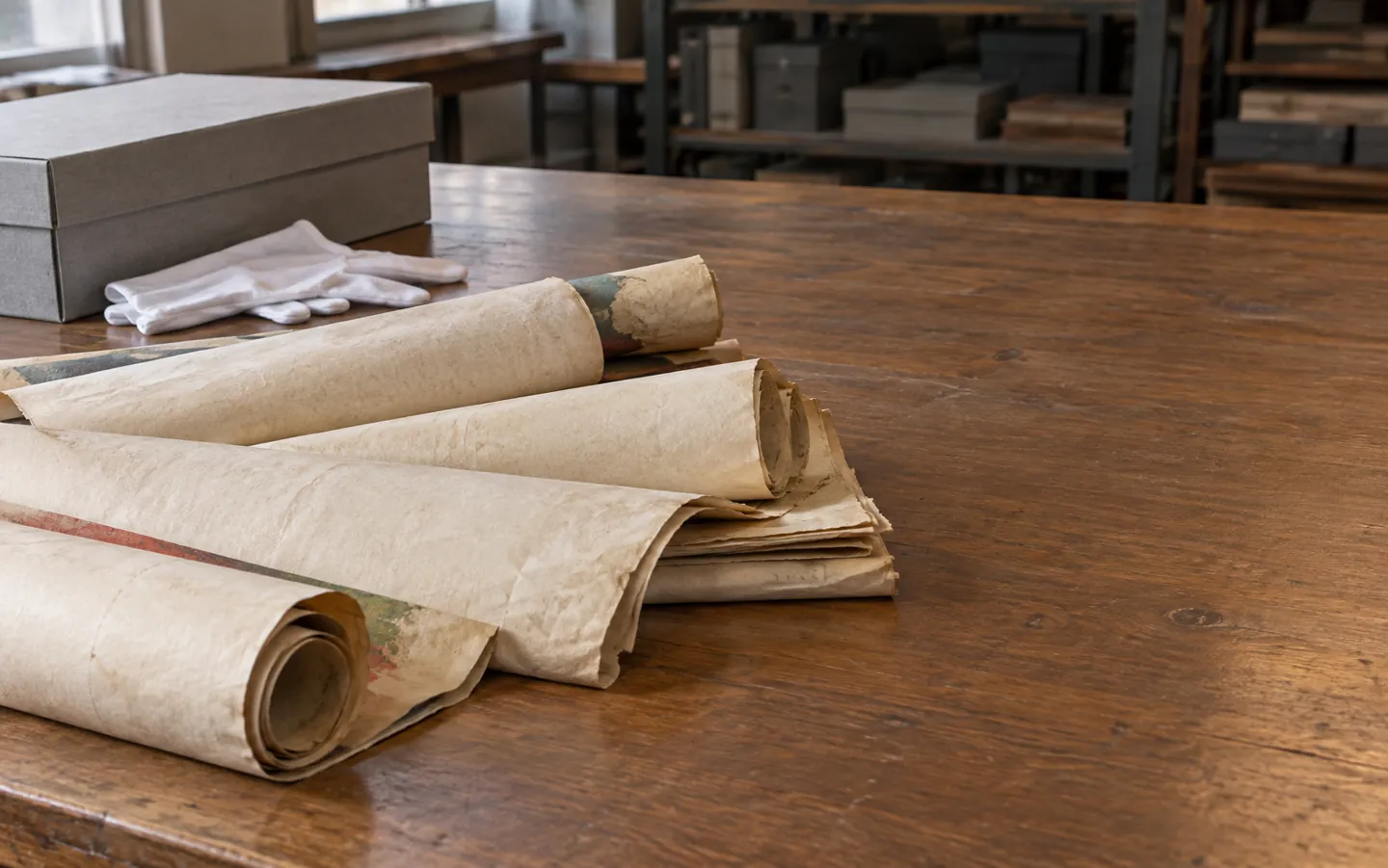
In the Second World War the government reached people through posters, leaflets, film and radio. Posters went up in shops, official buildings and village halls, asking everyone to grow food, save waste, keep healthy and guard their words.
DO YOUR BITsaid every wall
Read a posterKeep in mind
THE SHORT ANSWER
Food, scrap, health and silence.
Each campaign had a job to do.
NEVER ISSUED
The Ministry of Information printed 2.45 million Keep Calm and Carry On posters in 1939, but their display was never officially authorised.
See the numbersFOOD
Food was hard to import in wartime, so posters urged people to grow food in the garden or get an allotment, and feed kitchen waste to animals.
Read a posterSALVAGE
Salvage posters asked people to separate paper, metal and bones, which could be used to make aeroplanes and ammunition.
Read like a historianHOW A POSTER PERSUADES
The National Archives teaches that wartime posters used a handful of devices to gain attention and influence people. Pick one to see a real example. The bar shows how directly it tells you what to do.
Examples from The National Archives' Second World War posters resource and the Imperial War Museum's home front poster collection.
TWO NUMBERS WORTH KNOWING
The most famous home front poster
was the one almost nobody saw at the time.
2.45 million
Copies printed before war began
The slogan was coined between 27 June and 6 July 1939 as one of three 'Home Publicity' posters. It was held back, partly because it was thought 'too commonplace to be inspiring'.
KEEP CALM · MINISTRY OF INFORMATION
10,000+
Wartime propaganda posters held
The Australian War Memorial holds more than 10,000 wartime propaganda posters, including an original Keep Calm poster donated by the British government.
ONE COLLECTION · AUSTRALIAN WAR MEMORIAL
Most Keep Calm copies were pulped after the war ended in 1945. A copy found in a box of second-hand books around 2000 started the slogan's modern revival.
FOUR QUESTIONS TO ASK
The National Archives suggests these questions for any poster made to influence public opinion or behaviour, from any period.
Step 1
Look for the slogan or question, and the action it wants: travel less, grow food, save scrap, stay quiet.
Step 2
Spot the devices: slogans, humour, emotive language or questions, and why some words are bigger than others.
Step 3
Ask how colour, characters and images help make the point and appeal to feelings.
Step 4
Find the context: who produced it, when, and what was happening. Posters also give 'unwitting' evidence about everyday life.
WHY POSTERS MATTERED

The National Archives explains that posters made it clear everyone was in the war together. That mattered when Britain needed factories to make as many planes and tanks as they could and farmers to grow as much as possible.
Health posters had a practical job too. Blackout rules covered every window at night and left streets unlit, causing accidents, and people needed to stay fit to keep up production in factories and on the land.
Questions
No. 2.45 million copies were printed in 1939, but display was never officially authorised. It was held in reserve and most copies were pulped after the war.
Many were produced by the Ministry of Information, alongside leaflets, films and radio broadcasts. Other bodies, such as the Railway Executive Committee, also issued posters.
Ministry of Information posters warned that talk could reach the enemy: 'Telling a friend may mean telling the enemy', and never talk about sailing dates, cargoes or destinations. 'Be like Dad, keep mum!' was part of the same campaign.
It was difficult to import food in wartime, so posters encouraged people to grow food in gardens or on allotments, and kitchen waste could be fed to animals.
Large collections are held by the Imperial War Museums and The National Archives in the UK, and the Australian War Memorial holds more than 10,000 wartime propaganda posters.
Destination
Updated
ABOUT THIS NAME
doodleposters.com is part of the DoodleSale portfolio. It isn't in an auction right now, but you can ask about leasing it.